Can a Solar Battery Be Installed in a Garage?
A garage can be a practical location for a solar battery when the space matches the battery manufacturer’s installation requirements and applicable electrical rules. The decision involves more than finding an empty section of wall or floor. A suitable garage location should work with the home’s electrical layout, installation method, environmental conditions, service access, and future energy plans. Treating the garage as part of the home’s energy infrastructure makes the planning process clearer and gives the qualified installer a more useful starting point for assessing the final position.
Treat the Garage as an Energy Room, Not Empty Storage Space
Start With the Electrical Route Through the Property
Before choosing an exact battery position, map the electrical route that the installation needs. Identify where the household electrical equipment sits, how the solar system connects, and where the battery would join that arrangement. This shifts the question from “Where is there free space?” to “Where does the system logically belong?” The Anker SOLIX Solarbank 4 E5000 Pro requires installation by a registered qualified electrician through a dedicated hardwired circuit in the UK. That requirement makes the electrical layout central to garage planning. A qualified electrician can assess the intended position in relation to the property’s electrical system and determine the appropriate installation arrangement according to the product instructions and applicable requirements.
Reserve a Working Zone Around the Battery
A garage often serves several purposes at once. It may contain a vehicle, bicycles, tools, shelving, sports equipment, or household storage. Battery planning should therefore define a dedicated working zone rather than simply occupying whatever space remains. The installer needs appropriate access for installation and future work, while the homeowner should be able to keep the area organised as garage use changes. Think about normal movement through the room and how stored objects are arranged throughout the year. This spatial planning also belongs in the wider solar panels and battery cost discussion because a complete home energy project includes more than equipment selection. The proposed installation location and the electrical work required to integrate the system are part of the project plan.
Check the Garage Environment Against Product Specifications
Garages can experience different environmental conditions from the main living space, so compare the proposed location with the battery’s published operating specifications. Solarbank 4 E5000 Pro is rated IP66, corrosion-resistant, and specified for operation from -20°C to 55°C. These figures provide concrete product information that an installer can consider when assessing a particular garage. The purpose of this step is to match the installation environment with the manufacturer’s requirements rather than relying on a general assumption that all garages behave alike. A garage attached to a home, a detached structure, and another enclosed utility space can each have their own conditions. Product specifications provide the reference point for evaluating whether the selected position fits the intended equipment.
Design the Garage Around the Battery’s Future Role
Leave Space for the Energy System to Grow
The first battery configuration may not be the final one. A household could add electrical loads, increase storage, or change the way it uses solar energy over the coming years. The garage layout can anticipate that possibility from the beginning. Solarbank 4 E5000 Pro starts with 5 kWh of capacity and can expand up to 30 kWh. Its modular design allows the storage system to be stacked and expanded in five seconds. For garage planning, this means the proposed battery zone can be considered as an expandable energy area rather than a position chosen only for the initial configuration. Preserving suitable space around the installation gives the household a clearer path if future energy requirements lead to additional storage capacity.
Consider Where Solar and Household Energy Meet
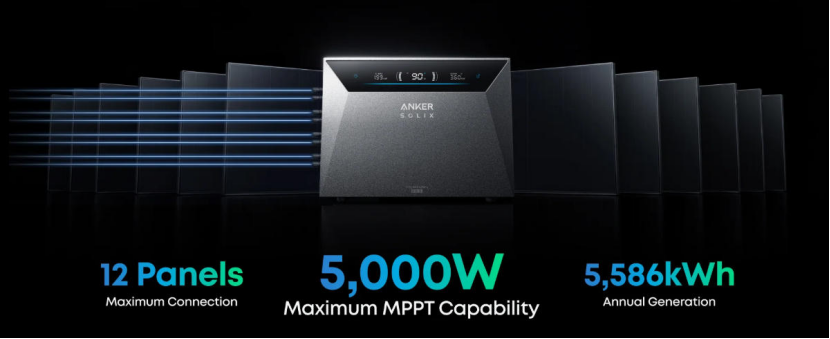
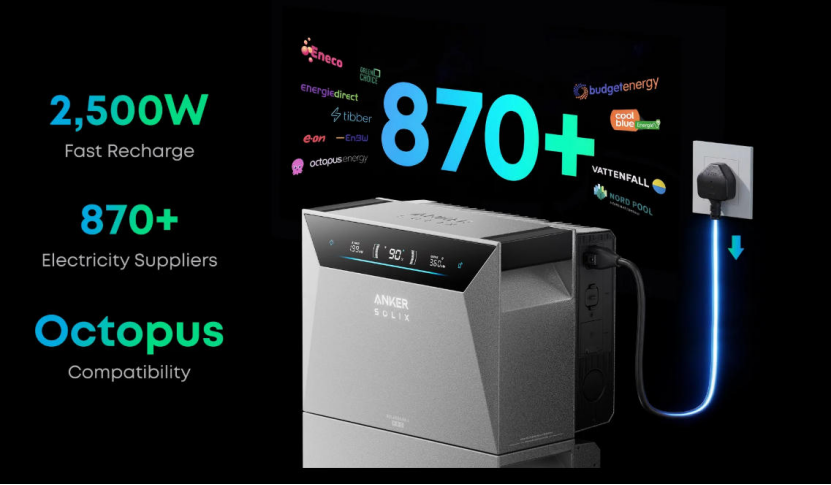
A garage battery is part of a larger system that connects solar generation, stored energy, household demand, and the grid. Solarbank 4 E5000 Pro supports up to 5,000 W of solar input, while its four MPPTs support 4 to 12 panels. It also provides 2,500 W of on-grid AC output and includes a built-in 2,500 W off-grid port. These functions make system layout relevant when evaluating a garage position. Instead of considering the battery as an isolated object, homeowners can discuss with their installer how the proposed location relates to the wider electrical arrangement. This system-level view can make the garage a deliberate energy hub within the property rather than simply a convenient place to put equipment.
Plan for Monitoring as Well as Physical Access
A well-planned battery location should support everyday energy management after installation. Solarbank 4 E5000 Pro works with Smart Meter Gen 2 for real-time monitoring. Its dual-circuit design monitors the main grid, while the second channel can either track third-party solar output or provide active circuit overload protection. This means homeowners do not need to judge the usefulness of the garage location only by how easily they can physically look at the battery. Energy movement can also be understood through monitoring data. The garage can remain a functional equipment area while real-time information provides visibility into household demand and solar energy. Physical access and digital energy visibility therefore serve different purposes within the same installation plan.
Conclusion
A solar battery can be installed in a garage when the chosen location meets the manufacturer’s requirements, fits the home’s electrical arrangement, and complies with applicable installation rules. Planning should begin with the electrical route, then consider dedicated working space, environmental specifications, future expansion, and the battery’s role within the wider solar system. For a hardwired product such as Solarbank 4 E5000 Pro, a registered qualified electrician should assess the final setup and determine how the garage location integrates with the property’s electrical infrastructure.
المواد الساخنة








Copyright © 2023 guideforests.com. All rights reserved.